
Add Row
Add Element
cropper
update
Caribbean Streaming Network
update
Add Element
  • Home
  • Categories
    • Caribbean
    • Streaming
    • Culture
    • Music
    • News
    • Sports
    • Entertainment
    • Islands
    • Community
    • Global
    • Food
    • Music
October 27.2025
2 Minutes Read

Hurricane Melissa: A Category 4 Storm Threatens Jamaica – How to Prepare

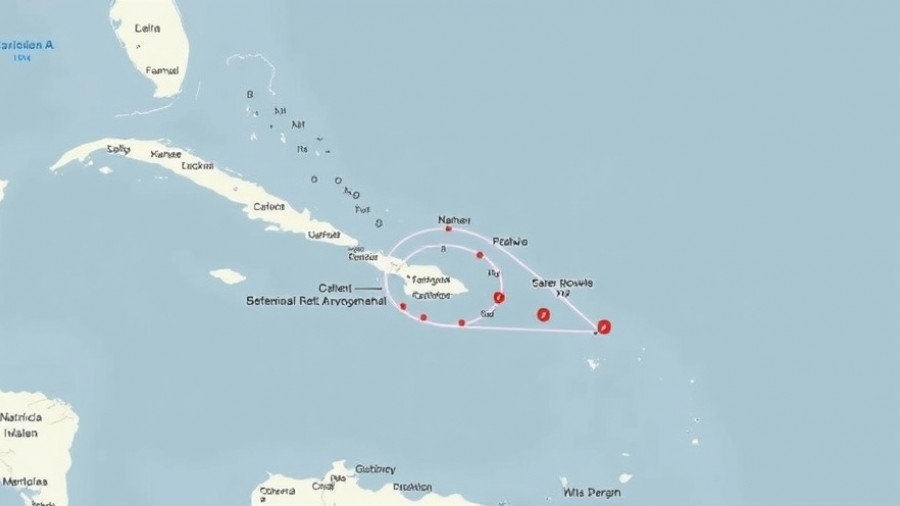
Hurricane Melissa's projected path across Caribbean, showing preparations for Jamaica.

Hurricane Melissa's Unprecedented Threat to Jamaica

As Hurricane Melissa escalates into a formidable Category 4 storm with winds reaching 140 mph, Jamaica finds itself in a precarious position. With the potential for catastrophic floods, landslides, and severe storm surges, the urgency to prepare has never been greater.

The Prime Minister, Dr. Andrew Holness, has made clear the gravity of the situation, advising citizens to secure their homes and prepare for the inevitable impact. He noted that Jamaica has experienced storms before, but this hurricane poses an unusual and significant threat, as it has been lingering in the Caribbean for an extended duration.

Emergency services are mobilizing in response to the looming threat. Mandatory evacuation orders are in place for areas like Port Royal, where climates are especially vulnerable to flooding. Local leaders stress the importance of adhering to government directives and utilizing verified information sources during this critical time.

Community Resilience: A Beacon of Hope

Despite the dire conditions, there is a positive side to this story. Community efforts are in full swing, with the Jamaica Red Cross actively preparing for the storm. They've positioned relief supplies across the island and trained volunteers to support affected families in the immediate aftermath.

Esther Pinnock from the Jamaica Red Cross indicated that early action is crucial in minimizing disaster impacts. Their proactive approach exemplifies the resilience of Jamaicans in face of nature's fury. With the country still recovering from Hurricane Beryl, the loss and challenges from recent storms remain fresh in residents' minds, placing immense pressure on communities to be prepared.

Lessons from Past Storms: What Can Be Done Differently?

Jamaica’s historical context reveals that severe weather events can have long-lasting repercussions. The aftermath of Hurricane Beryl, which inflicted $204 million in damages, serves as a crucial reminder for preparedness and robust disaster response strategies.

Increased rainfall is expected with Hurricane Melissa—predictions suggest up to 40 inches in localized areas—transforming low-lying regions into flood zones. Kingston, known for its vulnerable communities, faces severe risks, yet there is hope through enhanced evacuation protocols, community training, and a collective determination to safeguard lives.

Looking Ahead: Preparedness is Key

The mounting climate crisis leads us to consider how storms like Melissa might evolve in intensity and frequency. With predictions indicating an increase in severe weather patterns worldwide, it is imperative for Caribbean nations to invest further in climate resilience and disaster preparedness. After all, acting on learned lessons is what empowers communities to thrive in the face of adversity.

Final Thoughts: Stand Together

As Jamaica braces for Hurricane Melissa, the call for unity, preparedness, and informed action resonates deeply. Communities and regions are urged to cooperate and support each other, ensuring that no one faces the storm alone. By coming together and harnessing community spirit, the impact of this hurricane can be mitigated.

News

15 Views

0 Comments

Write A Comment

*
*
Related Posts All Posts
11.30.2025

Prime Minister Browne's Diplomatic Letter: A New Era for St. Vincent and the Grenadines

Update Strengthening Caribbean Ties: A Diplomatic Gesture In a recent move aimed at reinforcing ties within the Caribbean, Prime Minister Gaston Browne of Antigua and Barbuda reached out to the newly elected Prime Minister of St. Vincent and the Grenadines, Dr. Godwin Friday. This gesture comes at a critical time, as regional cooperation becomes increasingly essential in tackling shared challenges such as climate change and economic development. Acknowledging Past Leadership Prime Minister Browne also took a moment to extend his gratitude to Dr. Ralph E. Gonsalves, the outgoing prime minister, recognizing his 24 years of service. Celebrating Gonsalves' contributions underscores the importance of experienced leadership in ensuring that the Caribbean remains united as it navigates complex global issues. Significance of Cooperation in the OECS and CARICOM The calls from Browne highlight an enduring commitment to deepen collaborations under the Organization of Eastern Caribbean States (OECS) and the Caribbean Community (CARICOM). These collaborations are vital in promoting regional integration, which has immense benefits for trade, security, and cultural exchange among member nations. Building a Legacy of Unity As Dr. Friday steps into his new role, his leadership will be instrumental in continuing the shared journey towards greater unity in the Caribbean. The foundation laid by previous leaders like Gonsalves can pave the way for innovative approaches to challenges faced by the region today. Forging Ahead with Optimism The letters exchanged reflect not only a respect for the past but an optimistic outlook towards the future of Caribbean governance. The current political landscape reminds us of the resilience and adaptability that define the region, showing that cooperation can lead to tangible improvements in the lives of Caribbean citizens. Looking Forward As we look ahead, the commitment to collaboration and respect among leaders will be crucial in addressing emerging issues like climate adaptation and economic stability. The recent communication from Prime Minister Browne serves as a reminder that unity is strength.

11.28.2025

Ralph Gonsalves Faces Political Setback: Implications for St. Vincent and the Grenadines

Update Ralph Gonsalves' Electoral Setback: A Political Turning Point for St. VincentIn an unexpected electoral upheaval, Prime Minister Ralph E. Gonsalves of St. Vincent and the Grenadines has suffered a humiliating defeat, as preliminary results show his party, the Unity Labor Party (ULP), losing dominance in parliament after a historic 24-year reign. Gonsalves, who had anticipated an electoral bounce by calling early elections to surprise the opposition, instead witnessed a landslide victory for the New Democratic Party (NDP), led by historian Dr. Goodwin Friday.In this major political shift, the NDP clinched an overwhelming 14 out of 15 constituency seats, leaving Gonsalves's ULP with just one, a stark contrast to the prior control of nine seats. This shift marks not only a loss for the ULP but also a pivotal moment for the political landscape of the region. Gonsalves' political career, spanning over two decades, is punctuated by developmental successes, including the Argyle International Airport project. Yet, his loss signals a growing voter dissatisfaction with the ULP’s policies.Implications for Foreign Relations and Economic PoliciesThis electoral change could have profound implications for St. Vincent’s foreign policy. Dr. Goodwin Friday has suggested that the new administration might sever ties with Taiwan, favoring diplomatic relations with mainland China, echoing a trend among many Caribbean nations. Additionally, the NDP plans to implement a Citizenship by Investment Program, leveraging foreign investments to regenerate the economy—a shift Gonsalves had staunchly opposed. These changes could reshape economic strategies significantly as neighboring countries have found success in offsetting economic downturns through such initiatives.Analyzing the Voter SentimentThe electoral shift reflects a deeper voter sentiment in St. Vincent, as citizens increasingly seek to address economic challenges through innovative means. The defeat of Gonsalves’s son, Camillo, who previously served as Minister of Finance, further underscores the disconnect between the ULP and the electorate's needs. New leadership under Friday carries the potential for a revitalized approach, echoing sentiments of collaboration and urgency in facing national issues.The Path Forward for Gonsalves and the ULPAs Gonsalves navigates this defeat, he remains committed to representing his sole constituency while reflecting on over two decades of leadership. His acknowledgment of this humbling experience suggests a readiness to adapt and contribute positively to the upcoming changes in leadership. The coming months will be crucial for both former and current leaders as they redefine their roles and address the pressing issues affecting St. Vincent and the Grenadines.

11.27.2025

Exploring the Stand Your Ground Bill in Trinidad: Safety or Risk?

Update Defending Your Home: A Controversial Move in Trinidad The Trinidad and Tobago government is stepping into a heated debate with its introduction of the 'Stand Your Ground' bill, allowing property owners the right to use deadly force in defense of their homes. Prime Minister Kamla Persad-Bissessar argues that this legislation is necessary to address growing concerns over home invasions, which she describes as an urgent threat to family safety and personal security. Legislation and Its Implications During the parliamentary discussions, Attorney General John Jeremie emphasized that the rise in crime necessitated a strong legal framework supporting homeowners' rights. He asserts that a person's home is their castle and that the legislation is a critical step towards empowering citizens against criminal acts. This perspective aims to restore a sense of safety that many feel has been lost over years of rising crime. Voices of Dissent However, the proposal was met with significant opposition. Former junior national security minister, Keith Scotland, raised serious concerns that the bill could lead to tragic consequences. He likened the situation to previous incidents where innocent individuals were harmed due to mistaken beliefs about their intentions. Scotland argues that the legislation does not provide adequate safeguards to ensure innocent lives are protected and criticizes the government for failing to address the root causes of crime. Societal Impact The clash in Parliament reflects a broader societal concern: Does empowering homeowners through potentially violent means create a safer community, or does it risk escalating tensions and misunderstanding among citizens? As debates unfold, citizens must consider the long-term implications of such a legislative approach on society’s values and safety. Conclusion As this contentious issue continues to develop, citizens are encouraged to reflect on what it means to feel safe at home while balancing the rights of individuals and the protection of innocent lives. The discussions in Trinidad serve as a critical reminder of the ongoing battle between safety and legal accountability in contemporary society.

Terms of Service

Privacy Policy

Core Modal Title

Sorry, no results found

You Might Find These Articles Interesting

T
Please Check Your Email
We Will Be Following Up Shortly
*
*
*